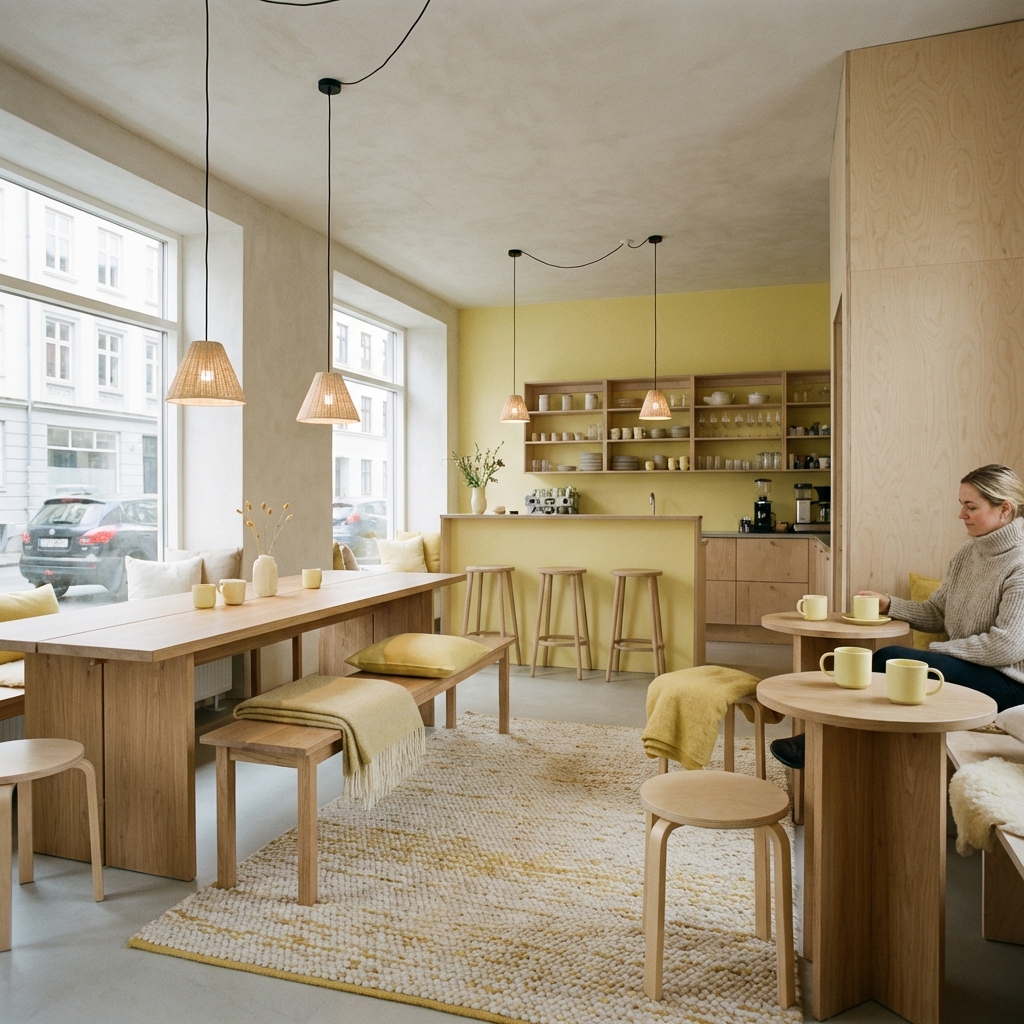
If there is one material that defines Nordic design, it is wood. Specifically, light wood. In a region with long, dark winters, the interior reflects the need for light and warmth. Light woods act as a natural reflector, bouncing light around the room and keeping the atmosphere airy and welcoming. But not all woods are created equal.
1. White Oak: The Timeless Classic
White Oak is perhaps the most popular choice for flooring and furniture. It is durable, hard, and has a beautiful, subtle grain. Its color ranges from beige to light brown. In Nordic interiors, oak is often treated with white oil or soap to prevent it from yellowing over time, maintaining that coveted pale, matte look.
Where to use it: Flooring, dining tables, durable chairs.
2. Ash: The Expressive Choice
Ash is slightly lighter than oak and widely known for its elasticity. This makes it the perfect wood for steam-bent furniture, a technique mastered by Danish mid-century designers. It often features a more pronounced, wavy grain pattern, adding visual texture to a minimalist space without adding clutter.
Where to use it: Curved chairs, pendant light fixtures, decorative bowls.
3. Pine: The Humble Warmth
For a long time considered a "cheap" material, pine has made a massive comeback. It is softer and warmer in tone than oak or ash. The knots and irregularities give it character and a rustic charm that grounds modern spaces. Like oak, untreated pine can yellow, so a lye treatment is often recommended to keep it pale.
Where to use it: Shelving units, wall cladding, side tables.
Tips for Mixing Woods
You don't have to stick to just one type of wood, but be careful. A good rule of thumb is to match the undertones. If your floor is a cool, white-oiled oak, try to keep furniture in a similar cool tone family. Alternatively, create deliberate contrast—a pine table on a concrete floor creates a stunning balance of warm and cold materials.
← Back to Blog